Research Assistant Professor
College of Forest Resources and Environmental Science, Michigan Technological University
and the Northern Institute of Applied Climate Science
Research
My research examines how social-ecological factors interact with one another and with environmental change to drive ecosystem functioning. I take an ecosystem-based approach to addressing a broad range of questions, from fundamental ecological processes to applied management challenges, across terrestrial systems (e.g., forests, grasslands, agricultural, and urban). My work combines "big data" analysis and synthesis with observational studies and experimental approaches. In collaboration with the Northern Institute of Applied Climate Science (NIACS), much of my research focuses on how land management affects carbon cycling and other fundamental ecosystem processes. Please reach out if you see opportunities to collaborate!
Currrent Research Themes
**Click on images below to learn more**

Above-belowground linkages

Prescribed fire
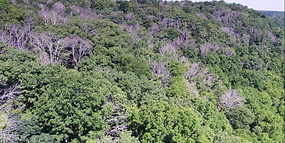
Disturbance


Past Research

Forest C and N cycling
Much of my past and current research has focused on how plants and their associated microbial communities drive carbon and nutrient cycling in forests.


Urban forests
With the Minneapolis-St. Paul Long-Term Ecological Research program, we built an urban tree inventory database for the Minneapolis-St Paul. metropolitan area and assessed how urban tree biodiversity relates to social and ecological vulnerability across the metro area. Our overarching goal was to provide relevant research and information to help build more resilient and equitable urban forests as our communities are increasingly threatened by multiple environmental changes such as disease outbreaks and more extreme weather events. Learn more here


Grasslands
In collaboration with researchers at the University of Minnesota, Oak Ridge National Laboratory, and Pacific Northwest National Laboratory, we examined how 10 years of nitrogen and phosphorus fertilization affected plant productivity and soil carbon storage across nine distinct temperate grasslands spanning the continental United States. In a separate cross-continental study, we assessed how nutrient supply interacts with grazing to affect leaf litter decomposition patterns.

Agroecology
In an interdisciplinary project with small organic farmers, we evaluated the ecological and economic costs and benefits of various mulching treatments on tomato productivity and soil health.